69. Saving Fish from Drowning by Amy Tan
 I liked this novel about a group of American travelers lost in Burma. It fits with the trend of liking each Amy Tan novel I read more than the last, which Valley of Amazement broke. Not because it wasn't an interesting story, but some of it just seemed too awful to be believed. Saving Fish from Drowning, despite a dead narrator, isn't too awful for me to believe, or at least, to suspend disbelief. I read this after a long streak of non-fiction, and I enjoyed getting in the heads of fictional characters again, and following a clear narrative structure. Recommended to fans of weird, somewhat creepy character-driven fiction and those interested in travel along the Burmese Road.
70. The Seven Habits of Highly Effective People by Stephen R. Covey
 This ended up in my boyfriend's book discard pile and caught my eye (he never read it; it was a gift). It's a book I never thought I would read. It's a book I've probably snickered at people for reading. Fortunately, I'm older and wiser now (or more desperate, ha!), and found some valuable thoughts in here. Honestly, as I guessed, a lot of it is common sense. Treat people how they want to be treated. It was interesting to me that the title is The Seven Habits of Highly Effective People, because, while that may be true, and Covey obviously believes it to be true, it seems more a manifesto about how to be a good person. In the long-term, Covey believes, people of good character will succeed. It's a comforting idea, whether or not it's true, and it imparts a sense of empowerment. He reminds us that while we cannot control outside forces, we can control how we react. I'm familiar with this message, and I'm sure it's far older than this book, but it helped to contemplate it again.
The most useful part of reading this book, for me, was the opportunity to think carefully about how to be a better person and how best to relate others. While it may be common sense, we may not think enough about how our actions and even our thoughts affect how we are perceived and treated, and how we can effect change in our lives through deciding not to let others dictate how we act or feel. Covey frequently mentions Viktor Frankl's Man's Search for Meaning, which I also own and plan to read soon, as evidence of how we can control our reactions. In later sections, he mentions the autobiography of Anwar Sadat (the Egyptian president who signed a peace agreement with Israel) and numerous examples of the power of focusing only on one's own reactions from his own life. Most of his personal examples have to do with being a parent, and each example seems to mention a different child! I was wondering how many children he could possibly have, when I turned to his biography in the back. He and his wife have nine children! However, it's clear that he considers his role as a father to be his most important. More than focusing on work as I expected, the book is more about parenting, although the principles transfer to most if not all inter-personal relationships.
The most important takeaways I got were (I think) finally understanding the concept of synergy, which has just been a buzzword for as long as I can remember, and the extremely comforting idea that character matters more than personality. Also, this book came out the year I was born, and I know it's been highly influential, so I wonder if I've picked up many of the specific terms used in the book because of that, although I know the concepts are much older. I don't feel like I need to recommend this because I think, if you need it, you will know. It's not a cure-all or quick fix, but you may just hear something you need to think about in order to find your own answer.
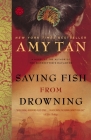 I liked this novel about a group of American travelers lost in Burma. It fits with the trend of liking each Amy Tan novel I read more than the last, which Valley of Amazement broke. Not because it wasn't an interesting story, but some of it just seemed too awful to be believed. Saving Fish from Drowning, despite a dead narrator, isn't too awful for me to believe, or at least, to suspend disbelief. I read this after a long streak of non-fiction, and I enjoyed getting in the heads of fictional characters again, and following a clear narrative structure. Recommended to fans of weird, somewhat creepy character-driven fiction and those interested in travel along the Burmese Road.
70. The Seven Habits of Highly Effective People by Stephen R. Covey
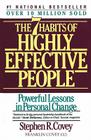 This ended up in my boyfriend's book discard pile and caught my eye (he never read it; it was a gift). It's a book I never thought I would read. It's a book I've probably snickered at people for reading. Fortunately, I'm older and wiser now (or more desperate, ha!), and found some valuable thoughts in here. Honestly, as I guessed, a lot of it is common sense. Treat people how they want to be treated. It was interesting to me that the title is The Seven Habits of Highly Effective People, because, while that may be true, and Covey obviously believes it to be true, it seems more a manifesto about how to be a good person. In the long-term, Covey believes, people of good character will succeed. It's a comforting idea, whether or not it's true, and it imparts a sense of empowerment. He reminds us that while we cannot control outside forces, we can control how we react. I'm familiar with this message, and I'm sure it's far older than this book, but it helped to contemplate it again.
The most useful part of reading this book, for me, was the opportunity to think carefully about how to be a better person and how best to relate others. While it may be common sense, we may not think enough about how our actions and even our thoughts affect how we are perceived and treated, and how we can effect change in our lives through deciding not to let others dictate how we act or feel. Covey frequently mentions Viktor Frankl's Man's Search for Meaning, which I also own and plan to read soon, as evidence of how we can control our reactions. In later sections, he mentions the autobiography of Anwar Sadat (the Egyptian president who signed a peace agreement with Israel) and numerous examples of the power of focusing only on one's own reactions from his own life. Most of his personal examples have to do with being a parent, and each example seems to mention a different child! I was wondering how many children he could possibly have, when I turned to his biography in the back. He and his wife have nine children! However, it's clear that he considers his role as a father to be his most important. More than focusing on work as I expected, the book is more about parenting, although the principles transfer to most if not all inter-personal relationships.
The most important takeaways I got were (I think) finally understanding the concept of synergy, which has just been a buzzword for as long as I can remember, and the extremely comforting idea that character matters more than personality. Also, this book came out the year I was born, and I know it's been highly influential, so I wonder if I've picked up many of the specific terms used in the book because of that, although I know the concepts are much older. I don't feel like I need to recommend this because I think, if you need it, you will know. It's not a cure-all or quick fix, but you may just hear something you need to think about in order to find your own answer.
Comments
One aspect of the book's brilliance is that different people take away different parts of the "key insight" (or perhaps even choose a different one at a different stage in life.
For me it was the notion that we don't see the world as it is but as we are. What has gone before in our lives shapes our reactions and views to a degree that we can't fully digest. What we think is the "right" or "wrong" way to see things really doesn't reflect right and wrong, but our different experiences.
One we understand that, it becomes easier to really try to understand why other people see things different from us without being personally threatened.